Beyond ScarcityThe standard
Draft for commentVersion 0Not a certification
The Beyond Scarcity Standard
A maturity ladder for the energy and compute industries, scored on the Net Positive (N+) methodology. Enter where you stand. Climb in the open.

Purpose
Intelligence is being built at planetary scale. The only question left is whether it extracts from the Earth or regenerates it.
This standard gives every energy and compute operation a visible path from extraction to regeneration. It names where an operation stands, defines what the next tier asks of it, and requires that each step be verified.
We do not think the build-out should stop. We think it should become the thing that heals what it touches.
Scope
Any energy or compute operation: coal, gas, nuclear, solar, hyperscale. The standard is open to operations in every jurisdiction and of every size.
Operations enter at the tier that describes them today. Joining is not a judgement; it is a baseline and a public commitment to move.
The tiers
Three tiers, named rather than numbered, in one direction.
- I
Extractive
Where most of the industry stands today. Grid-mixed power, mined minerals, consumptive water, no remediation. Joining here is not a judgement; it is a baseline and a public commitment to move.
- II
Transitional
Verified reductions on every axis: additional clean generation under contract, closed-loop or reclaimed water, minerals with documented recycled or domestic content, first remediation projects funded and audited.
- III
Regenerative
Net positive on every axis, independently verified: gives back more energy, water, and living ground than it takes.
At the summit of Regenerative sits the state this whole project is named for: Beyond Scarcity, where energy and the elements themselves are no longer taken from the Earth by force.
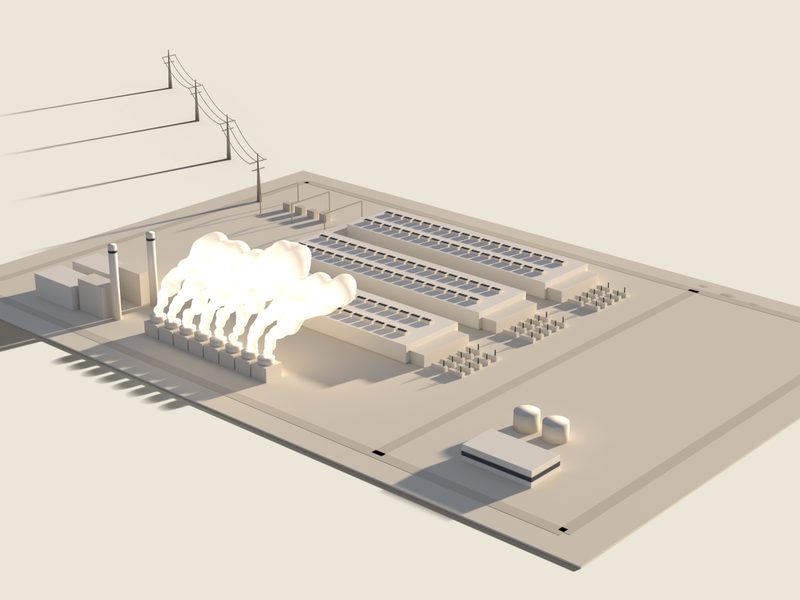 I
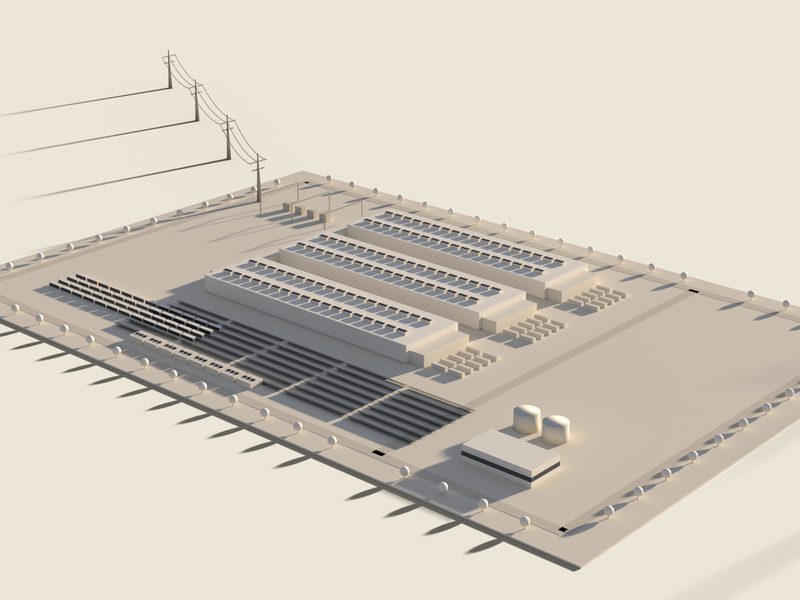 II
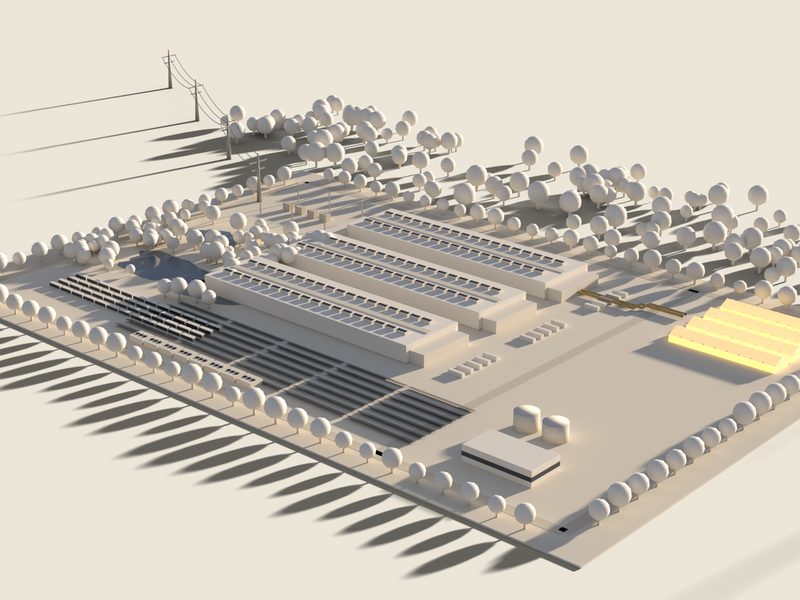 III
The axes
Every tier is assessed on the same axes. The criteria below restate the version 0 tier definitions axis by axis. They are a starting point for the convening, not final thresholds: the metrics, thresholds and audit methods for each cell are the work of version 1.
| Axis | IExtractive | IITransitional | IIIRegenerative |
|---|---|---|---|
| Energy | Grid-mixed power. | Additional clean generation under contract. | Gives back more energy than it takes. |
| Water | Consumptive water. | Closed-loop or reclaimed water. | Gives back more water than it takes. |
| Minerals | Mined minerals. | Documented recycled or domestic content. | Net positive, independently verified. Method to be defined by the convening. |
| Living ground | No remediation. | First remediation projects funded and audited. | Gives back more living ground than it takes. |
| Verification | A public baseline and a commitment to move. | Reductions verified on every axis. | Independent verification on every axis. |
The measure: Net Positive (N+)
Sustainability aims for zero. Net Positive, the practice of giving back more than we take, is the framework Dr. Tia Kansara has carried across 90 countries and 120 organisations. It is the yardstick inside every tier.
Net Positive is the measure inside the standard, not its name: every tier is scored against it, and the Regenerative tier is defined by it.
Principles
- 6.1No one is excluded.
Every operation may enter at its true baseline. The ladder exists to be climbed, not to keep anyone out.
- 6.2No claim without a source.
Every figure, criterion and result the standard relies on is traceable to a public source.
- 6.3Verification rises with the tier.
A tier is held only when it is verified. The higher the tier, the more independent the verification.
- 6.4Frontier results wait at the gate.
The standard does not depend on frontier technology. Results that are reported but not yet independently replicated make no claim within it.
- 6.5Built in public.
Criteria, changes and the reasons for them are published, with a version history.
Alignment with existing measures
Where an established international measure already exists, the criteria will use it rather than invent another, so that no operator reports twice. Proposed references for the convening:
- Energy and water performance
The ISO/IEC 30134 series of data-centre key performance indicators, including power usage effectiveness (PUE), renewable energy factor (REF), energy reuse factor (ERF), carbon usage effectiveness (CUE) and water usage effectiveness (WUE).
- Greenhouse gas accounting
The GHG Protocol Corporate Standard and its Scope 2 Guidance (World Resources Institute and WBCSD, 2015).
- Minerals provenance
The OECD Due Diligence Guidance for Responsible Supply Chains of Minerals from Conflict-Affected and High-Risk Areas (third edition, 2016).
- Public reporting
Regional regimes such as the European Union’s data-centre reporting under the Energy Efficiency Directive (EU) 2023/1791, Article 12, and its rating scheme, Delegated Regulation (EU) 2024/1364.
Named for interoperability only. No endorsement by any of these bodies is claimed or implied.
How the standard will be built
- NowDraft, version 0
Published 27 October 2026 for industry comment: three named tiers, the summit state and the axes in outline.
- NextThe convening
A working group of energy developers, compute operators, materials and water innovators, capital and the public reviews the draft.
- ThenRubric, version 1
Measurable thresholds, metrics and audit methods for every cell of Table 1, published with the reasoning behind them.
- ThenIndependent verification
The first operations assessed against version 1 by independent verifiers.
Provenance
Standing on known ground: four lineages, and one new marriage.
- Energy tiers of civilisationKardashev, N. S. (1964). Transmission of information by extraterrestrial civilizations. Soviet Astronomy, 8, 217. Sagan, C. (1973). The Cosmic Connection, for the continuous interpolation of the scale.
- Post-scarcity and ephemeralisationFuller, R. B. (1969). Operating Manual for Spaceship Earth. Southern Illinois University Press. Bookchin, M. (1971). Post-Scarcity Anarchism. Ramparts Press.
- The maturity ladder as mechanismHumphrey, W. S. (1989). Managing the Software Process. Addison-Wesley: the Capability Maturity Model, Software Engineering Institute, Carnegie Mellon University. Mankins, J. C. (1995). Technology Readiness Levels: A White Paper. NASA. U.S. Green Building Council, LEED. B Lab, B Corp Certification.
- Regenerative designLyle, J. T. (1994). Regenerative Design for Sustainable Development. John Wiley & Sons. McDonough, W. and Braungart, M. (2002). Cradle to Cradle: Remaking the Way We Make Things. North Point Press. Kansara, T. Net Positive (N+). Replenish Earth.
What is new is the marriage: a certification ladder measuring a civilisation’s ascent in how cleanly it climbs, not only how high.
Comment and the convening
The ladder is built in the open. Energy developers, compute operators, materials and water innovators, capital, and the public: join the working group shaping the draft criteria.
Every criterion in this draft is open for comment.
Join the conveningVersion history
| Version | Date | Change |
|---|---|---|
| 0 | First public draft: three named tiers, the summit state and the axes in outline. Open for comment. |
Cite this draft
Beyond Scarcity (2026). The Beyond Scarcity Standard. Draft for comment, version 0, 27 October 2026. https://beyondscarcity.earth/standard